Stop Bed Bugs Before They Invade Your Home
Bringing home sand from a Florida beach is normal. Bringing home bed bugs in your suitcase is not. Many travelers come back from a fun trip, roll their bags right into the bedroom, and unpack on the bed. A few days later, they start waking up with itchy bites and find tiny stains on their sheets. By the time they realize it is bed bugs, they are dealing with weeks of stress, lost sleep, and damaged furniture.
Post-trip bed bug checks matter, especially during busy travel seasons when hotels and vacation rentals have constant guest turnover. Bed bugs are small insects that feed on blood and hide in cracks and fabrics. They do not care if a place looks clean. They hide in mattresses, headboards, couch seams, and luggage, then hitch a ride home in clothes, bags, and even souvenirs.
As a Florida bed bug bite injury law firm, we see how fast a simple trip can turn into a nightmare at home. That is why we put together this practical checklist. We will walk through smart luggage quarantine, a strong laundry protocol, how to check your belongings and sleeping areas, when to notify the hotel, how to document what happened, and when it may help to speak with a bed bug bite injury lawyer.
Smart Luggage Quarantine the Moment You Get Home
The first minutes after you walk through the door can make a big difference. Try not to roll your suitcase straight onto bedroom carpet or set it on the couch. That gives any hitchhiking bugs a direct path to where you sleep and relax.
Instead, place your luggage on a hard, smooth surface, such as:
- A garage floor
- A balcony or patio
- A tile bathroom floor or bathtub
Once your bags are in a safe spot, use a calm, step-by-step approach:
- Open luggage slowly so you can spot anything moving
- Use a flashlight to check seams, zippers, pockets, handles, and the lining
- Look for live bugs, tiny white eggs, dark spots that look like ink dots, or shed skins
- Use a vacuum with a crevice tool on both the inside and outside of the suitcase
If you vacuum, empty the canister or throw away the bag outside right away. Do not leave it sitting in the house.
Heat and isolation can also help reduce risk, even though they are not guaranteed treatments. Some options include:
- Placing luggage in a sealed plastic bag or bin and leaving it in a hot car or direct sun for a period of time
- Considering a portable heater made for luggage, if you already own one
- Seeking professional treatment for the luggage if you clearly see signs of bed bugs
The goal is simple: keep possible bugs away from your bed, couch, and carpet until you have checked and cleaned everything.
Laundry Protocol to Kill Hitchhiking Bed Bugs
Next comes the laundry. Treat every piece of clothing from your trip as if it might be exposed. This helps you avoid missing anything.
Start by:
- Bringing clothes straight from the suitcase to the washer in a plastic bag
- Keeping items off the floor, bed, and furniture
- Sorting clothes near the washer, not in a bedroom
Heat is the main tool you have at home. Bed bugs and their eggs do not tolerate high temperatures for long. Focus on:
- Washing items on the hottest setting that is safe for the fabric, ideally at least 120°F
- Drying clothes on high heat for at least 30 minutes, since the dryer is often more important than the washer
- For delicates or dry-clean-only items, using the dryer on high heat for 20 to 30 minutes if the fabric care label allows, or asking a professional cleaner for guidance and sharing that there may have been bed bug exposure
Non-washable items need special care too. For example:
- Put shoes, hats, and soft bags that can handle heat into the dryer on high
- Place books, small souvenirs, and cases in sealed plastic bags and keep them away from sleeping areas while you watch for any signs of bugs
This may feel like extra work after a trip, but it is much easier than treating an infestation in your home.
Inspecting Souvenirs and Sleeping Areas After Travel
Even if you follow strong luggage and laundry steps, it is smart to keep an eye on your home for a couple of weeks after you return. Bed bugs are sneaky and might not show up right away.
Check your sleeping spaces by:
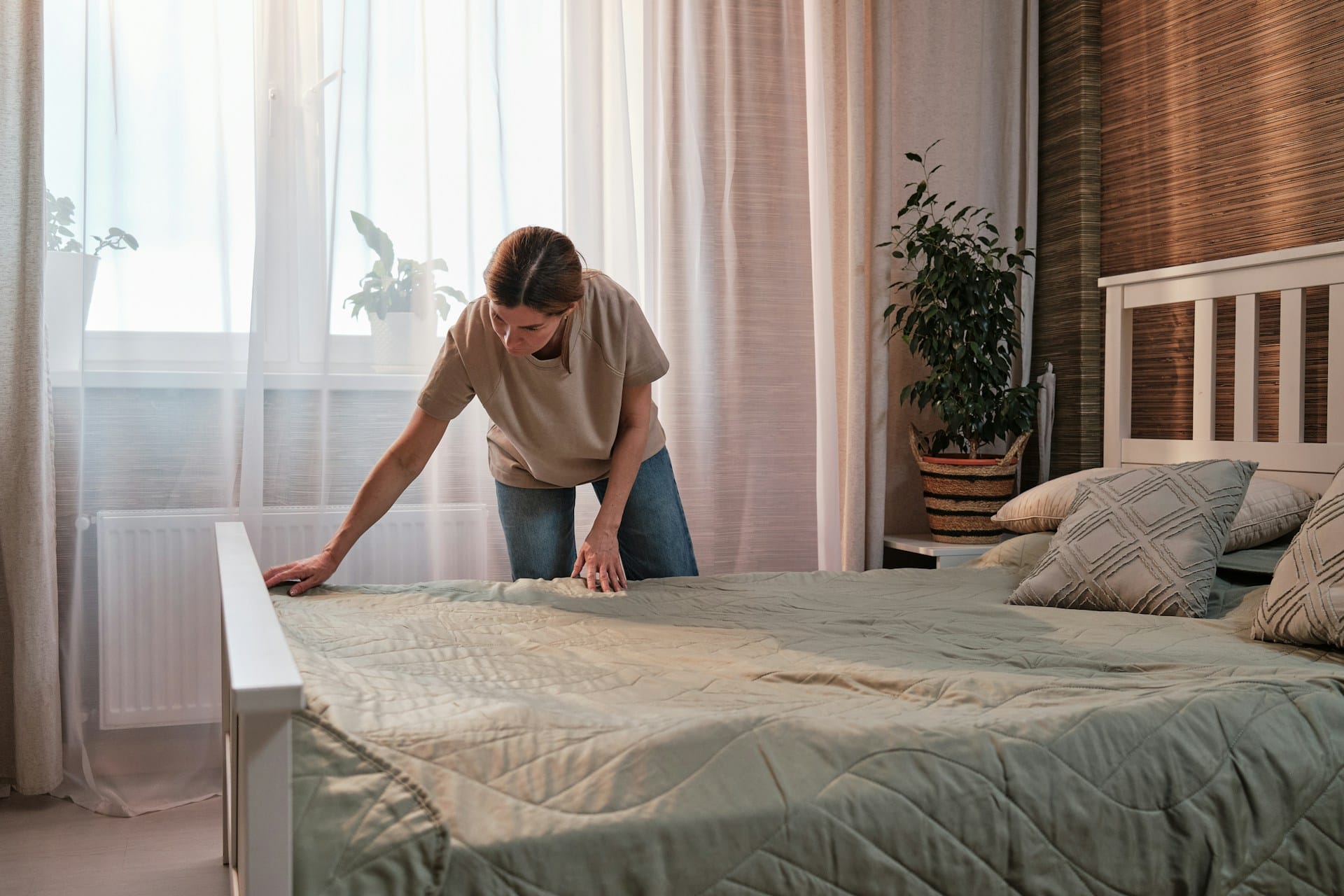
- Looking at mattress seams, edges, and tufts
- Lifting the corners of the mattress and checking the box spring
- Looking at the bed frame, headboard, and nearby baseboards
Watch for:
- Small dark specks or rust-colored stains on sheets or mattress covers
- Tiny white eggs in cracks or along seams
- Live bugs, often flat and reddish-brown after feeding
Do not forget souvenirs and personal items that spent time on hotel beds or couches. Pay extra attention to:
- Stuffed animals, fabric bags, travel pillows, and beach towels
- Hard items with fabric or foam parts, such as photo frames with padded backs
If you start to notice new itchy bites in lines or clusters, fresh stains on bedding, or bugs on or near the bed, act quickly. Isolate the area if you can and contact a licensed pest control company for a thorough inspection. Catching a problem early can prevent it from spreading through your home.
When and How to Notify the Hotel About Bed Bugs
If you suspect your hotel or vacation rental had bed bugs, reporting it is important. It helps protect other guests and can also create a record of what happened, which can matter later.
Here are simple steps to follow:
- Contact the property as soon as you suspect bed bugs, even if you are back home
- Share your stay dates and room number
- Explain what you saw and experienced, such as visible bugs, bites, or luggage and items that seem affected
Try to keep as much communication in writing as possible. You can:
- Send an email
- Use the property’s online message form if they have one
- Follow up any phone call with a short email summarizing what you discussed
Save copies of everything you send and receive. When you talk with the hotel, you can also:
- Ask if they inspected and treated the room and nearby rooms
- Request any incident report number or written confirmation of your complaint
- Be careful about accepting quick offers that require you to sign a release or waiver, especially if you had strong reactions, scarring, or damage to your belongings
Having clear communication records can be helpful if you later decide to talk with a bed bug bite injury lawyer.
Documenting Evidence for Health and Legal Protection
Good documentation supports both your health care and any legal discussion you may have in the future. Start as soon as you notice bites or signs of bugs.
Useful evidence includes:
- Photos of the bites on your skin from different angles
- Pictures taken on different days to show changes, such as swelling or scarring
- Clear photos or videos of any bugs, stains on sheets, and mattress seams
- Wide shots that show where the bugs were found, like parts of the hotel room, the bed, or the room number on the door
Also track your symptoms and costs. You can:
- Write down when you first noticed bites and how they changed over time
- Note itching, pain, sleep problems, and any emotional stress you felt
- Keep receipts for medical visits, medicines, new clothing or luggage, pest control visits at home, and any lost wages if you missed work
If your bites were serious, if you had allergic reactions or scarring, or if your home ended up infested after a stay at a hotel or rental, it may be helpful to talk with a Florida bed bug bite injury lawyer. An experienced lawyer can review your evidence, explain your options, and speak with the property owner or their insurance company on your behalf.
Protect Your Family and Know Your Legal Options
A fun Florida trip should not end with weeks of itching and stress at home. By quarantining luggage on hard surfaces, running a strong laundry protocol, watching your sleeping areas and souvenirs, notifying the hotel in writing if you suspect a problem, and carefully documenting what you see and feel, you lower the risk of a serious infestation and protect your family’s well-being.
At Bed Bugs Law, we focus on helping people who have suffered from bed bug bites and infestations linked to negligent hotels, rentals, and other properties. If you believe your injuries or home infestation started with a trip, a Florida bed bug bite injury lawyer can help you understand your rights, important timelines, and possible next steps to protect your health and your home.
Protect Your Rights And Start Your Bed Bug Claim Today
If you were bitten by bed bugs in a hotel, rental, or other property, Bed Bugs Law is ready to help you understand your legal options and pursue the compensation you may deserve. Speak with an experienced bed bug bite injury lawyer who knows how to investigate your case, preserve key evidence, and deal with insurers and property owners. We will review what happened, explain your rights in plain language, and guide you through every step of the claims process so you do not have to handle it alone.